
ZipWhoa! Rain AGAIN?! That's three times today! THREE!
Zip noticed something amazing in the rainforest...
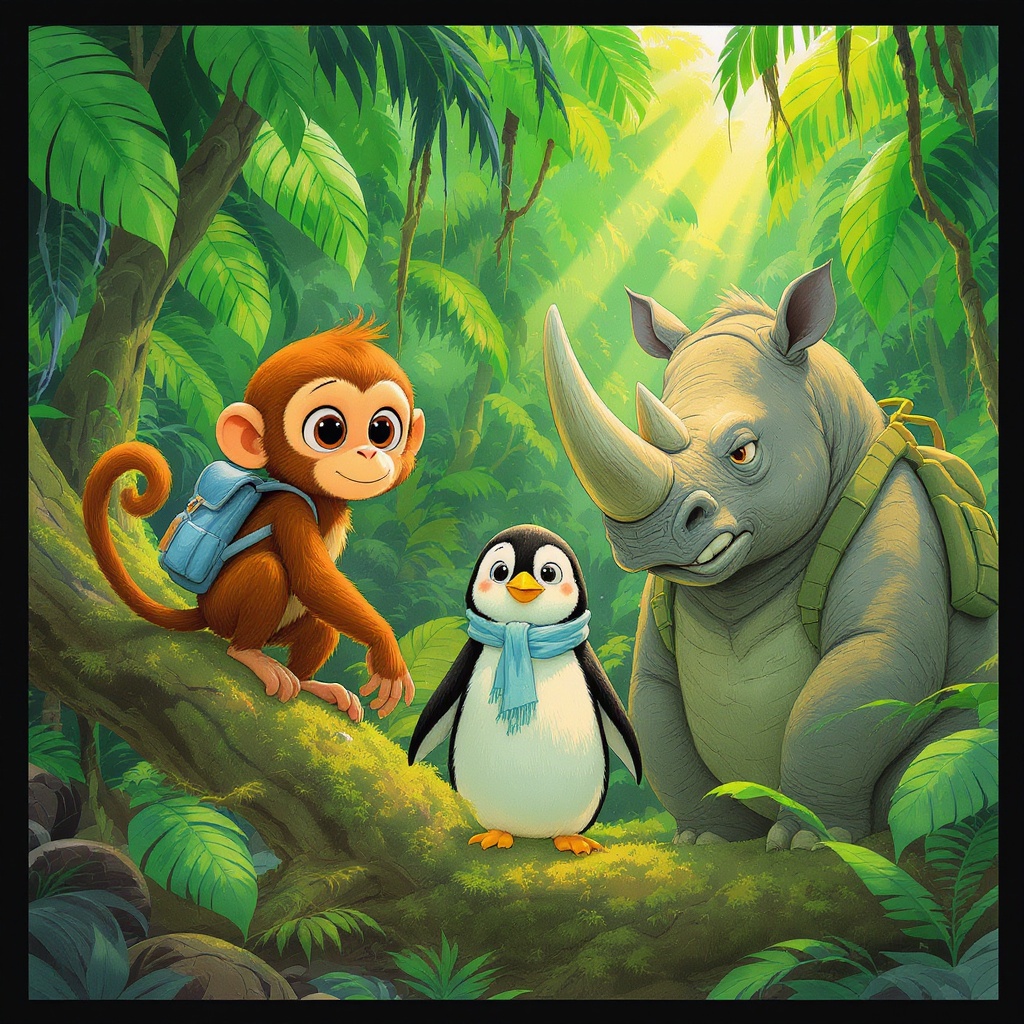
ZipFrost! Pointy! Why does it rain SO much here?
PointyOoh, I smell... water. Lots of water. Everywhere.
His friends came to investigate!
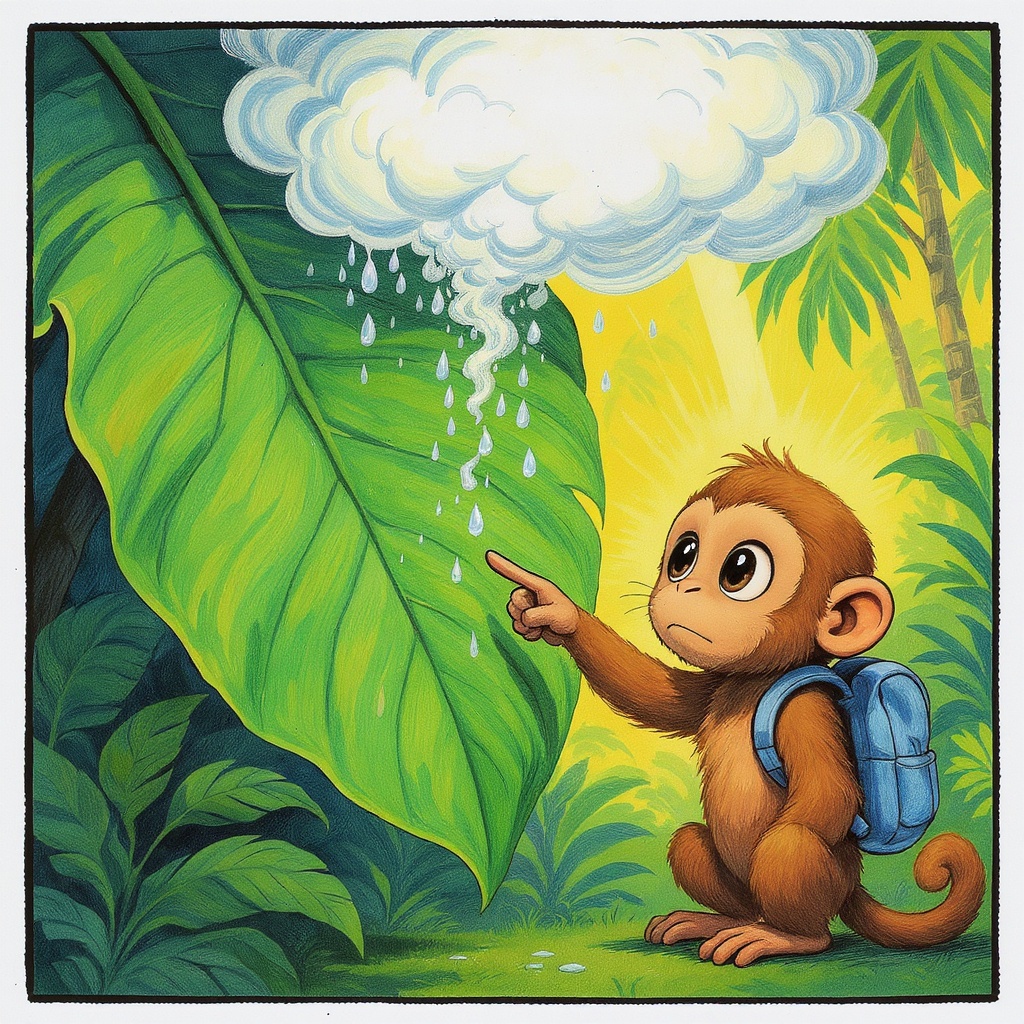
ZipWAIT. The water goes... UP? Up from the leaves into the clouds?!
Water travels from leaves UP into the sky!
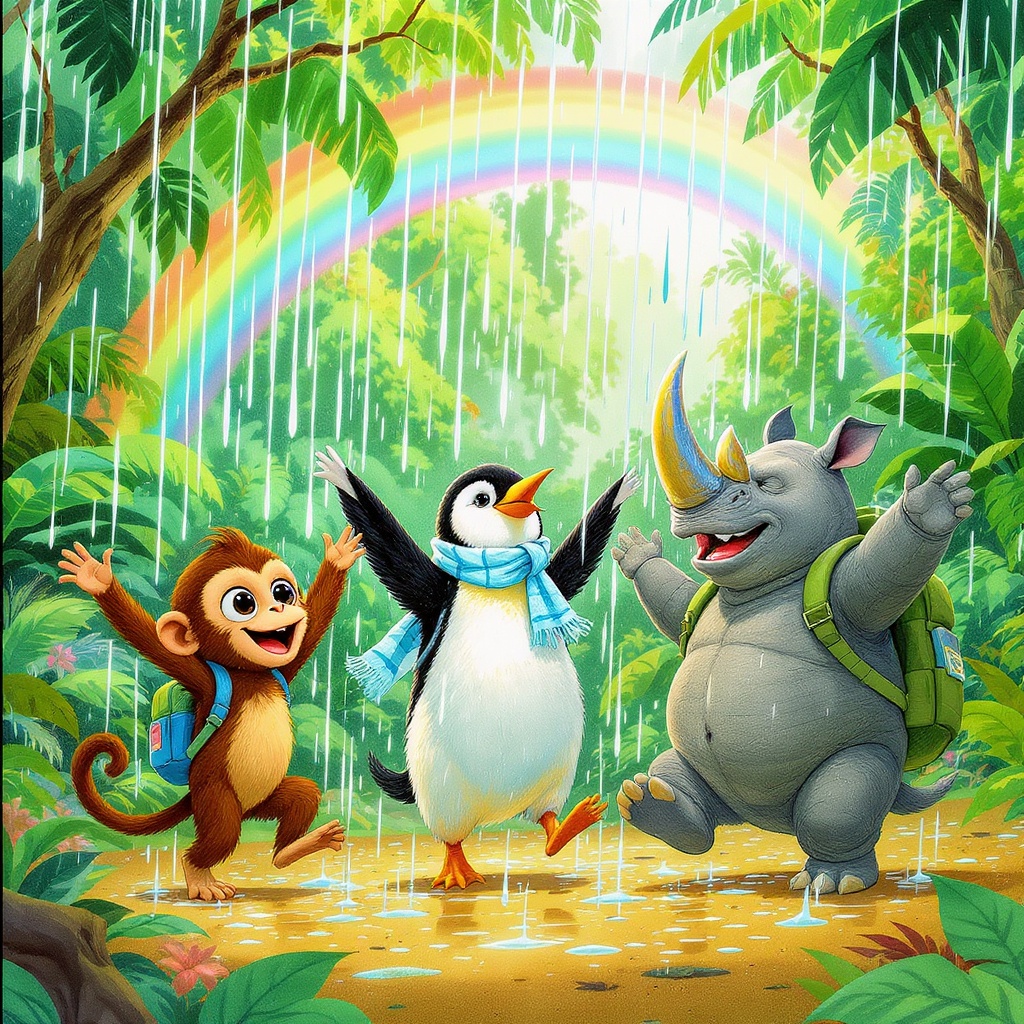
FrostIt's called the WATER CYCLE. It never stops.
ZipRain = the rainforest's giant drinking fountain! NOW I get it!
PointyCan we drink it? I'm asking for me.
The Water Cycle keeps the rainforest alive — and wet!
What your kid will learn
- Your kid follows Zip and Frost and Pointy through a real rainforest science mystery, makes a prediction, sees what happens, and tries it again — the scientific method as story.
- The episode anchors to a real science standard: NGSS: ESS2-3 — Obtain and combine information to describe climates in different regions of the world (Weather & Climate)..
- Each panel is designed to be read in dialogue, not silent: pause, ask a question, predict what comes next.
- After panel 3, the screen turns off and the real mission starts — based on this week's prompt: "TRY THIS AT HOME! Fill a clear cup with a little water. Cover with plastic wrap and leave in a sunny window for 2 hours. Watch water drops form on the plastic — that's a mini water cycle! The water "evaporated" up and then collected (condensed) on the cooler plastic — just like clouds!"
🗺️ This week's screen-off mission
After panel 3 the screen turns off and your kid has a real-world challenge to complete. This week's prompt is:
"TRY THIS AT HOME! Fill a clear cup with a little water. Cover with plastic wrap and leave in a sunny window for 2 hours. Watch water drops form on the plastic — that's a mini water cycle! The water "evaporated" up and then collected (condensed) on the cooler plastic — just like clouds!"
It's designed so even tired parents can run it. 5–15 minutes. Outside is great, kitchen-table is fine.
FAQ for parents
What age is this episode right for?
Episode 1 is calibrated for ages 4–8. The vocabulary is rich without being overwhelming, the science is concrete (a real rainforest water cycle), and the panel captions hold up whether your kid reads it themselves or you read it together. Older kids love it as a quick proof-of-concept before the harder episodes.
How much screen time does each episode add?
A full episode is 60–90 seconds of reading (about 4 panels). After panel 3, the screen turns off and the real-world mission starts — that's the part that takes 5–15 minutes offline. We deliberately designed it so the screen time starts the activity, not replaces it.
Is the science accurate?
Every episode is anchored to a specific NGSS science standard (we list it on the comic page). Each standard description is reviewed before release, and the science verification step pulls in primary sources for every claim — those links are at the bottom of every episode. We don't take scientific liberties for comedic effect.
What does a subscription add beyond this preview?
Subscribing unlocks the full panel 4 cliffhanger on every episode, the rest of the library (rainforest, antarctica, grasslands), all weekly activity packs with PDFs, the treasure-map and badge system, and offline coloring pages. $4.99/mo or free for one week — cancel any time from your dashboard.
How do I cancel?
Two clicks from your parent dashboard — no phone calls, no email hoops. We don't lock subscriptions behind retention flows. If it's not working for your family, we'd rather you leave cleanly than feel stuck.